Agentic AI Is Here. Is Your Security Ready?
Gartner held the Gartner Security & Risk Management Summit 2026 (hereinafter referred to as “Gartner SRM Summit 2026”) from June 1 to 3 at the Gaylord National Harbor Convention Center in Maryland, the United States. At the conference, Gartner analysts and security experts shared a wide range of insights, with a strong focus on AI.
The event brought together approximately 4,000 security professionals from around the world and featured more than 250 exhibitors and approximately 470 sessions. Agentic AI was clearly at the center of the event, with various sessions addressing AI-powered attack trends, AI-driven security measures, and security strategies for AI agents. Other topics discussed included CTEM (Continuous Threat Exposure Management), SASE (Secure Access Service Edge), and CPS (Cyber-Physical Systems) security.
Keynote: Security in the AI Era—From Prevention to Resilience
The opening keynote of Gartner SRM Summit 2026, titled “Seize the Moment,” was delivered by Leigh McMullen, Distinguished VP Analyst at Gartner.
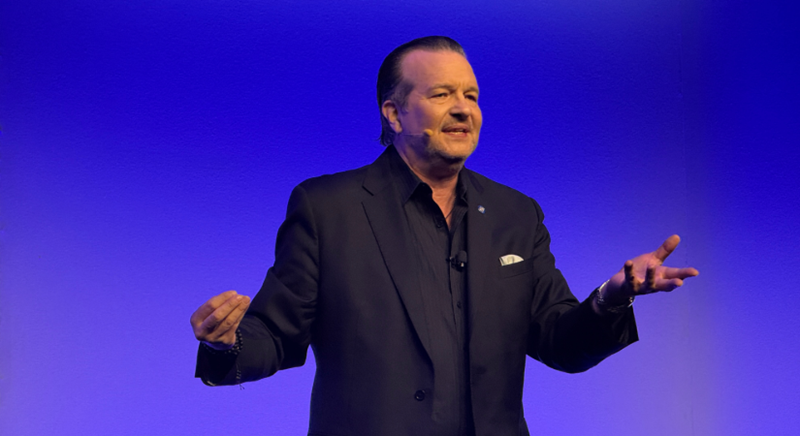
Figure 1. Leigh McMullen, Distinguished VP Analyst at Gartner (Source: Gartner)
McMullen first noted that AI-powered attacks, often referred to as Dark AI, are emerging as a major issue in the security industry. AI is significantly increasing attacker productivity and reducing attack preparation processes that previously took weeks or months to just a matter of minutes. He also predicted that AI-powered vulnerability discovery and the weaponization of AI would likely accelerate further in the future.
However, the core message of the keynote was not pessimistic. McMullen suggested that competition in the AI era should be viewed not as a race in offensive technologies, but as an automation race. AI is available not only to attackers but also to defenders, and defenders have access to more data, resources, and collaborative foundations. His view was that if threat intelligence, detection policies, and response playbooks are shared and automated, defenders can implement security more effectively than individual attackers.
He also explained that the proliferation of AI agents is bringing changes to identity security strategies. Rather than developing large, general-purpose agents, organizations need to design smaller, task-specific agents, apply least-privilege principles, and continuously monitor communications and behavior between agents. In particular, machine identities may outnumber human identities by as much as 80 to 1, meaning that management complexity is expected to increase further as AI agents become more widespread. According to McMullen, IAM (Identity and Access Management) will expand beyond its current focus on user authentication to encompass agents and machine identities as well.
He also stated that, alongside these changes, the goal of cybersecurity is shifting from prevention to resilience. Preventing every attack is not realistic, and minimizing business impact, reducing recovery time, and ensuring service continuity are now becoming more important. To achieve this, organizations need to define an impact threshold for each business process and execute recovery rehearsals and chaos engineering, which tests resilience by introducing real-world disruptions, as part of routine operational processes.
McMullen emphasized that security organizations in the AI era cannot gain a competitive advantage simply by purchasing more security tools. They must design and validate automation across security operations, vulnerability management, recovery procedures, testing environments, and agent-based workflows. Automation is not merely a means of improving efficiency; it is a core survival strategy for security organizations in the AI era.
Attack and Defense Strategies with Agentic AI
Rather than fundamentally changing the way cyberattacks are carried out, AI is increasing the speed and scale of existing attacks. Throughout multiple sessions at the conference, speakers discussed how AI is reshaping the threat landscape and security strategies from the perspectives of ransomware, vulnerability exploitation, social engineering, and security automation. The common message was clear: while AI enables attackers to conduct reconnaissance more quickly, and automate attacks at a much higher level, it also provides defenders with new opportunities for threat intelligence analysis, vulnerability prioritization, SOC automation, and resilience enhancement.
John Watts, VP Analyst at Gartner, presented AI-powered exploits and the expansion of attack scale as two of the most significant changes to the 2026–2027 threat landscape during the session "Outlook for Cybersecurity Threats: Prioritizing With Gartner's 2026–2027 Threatscape." According to Watts, AI-powered vulnerability analysis technologies such as Mythos and Glasswing can significantly reduce the time required from vulnerability discovery to exploit generation and execution.
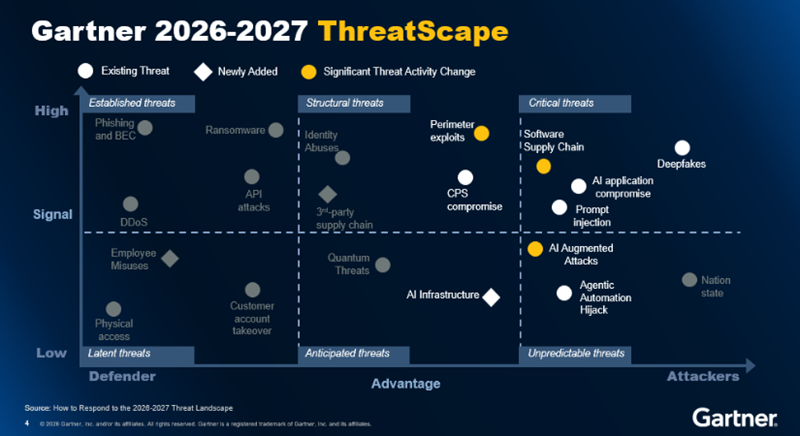
Figure 2. The 2026–2027 Threat Landscape (Source: Gartner)
Watts emphasized that, in the AI era, vulnerability exploitation is likely to become a more important initial access vector than phishing. Once a new vulnerability is disclosed, attackers can automatically scan vulnerable systems and launch attacks at scale. In the past, attackers selected specific targets and then exploited vulnerabilities. Going forward, however, they are expected to exploit newly disclosed vulnerabilities first and target susceptible systems. In response, simply shortening the patch cycle will no longer be sufficient. Organizations must identify exposed assets, prioritize remediation based on the likelihood of exploitation, and develop detection and response capabilities that enable them to block attacks at an early stage.
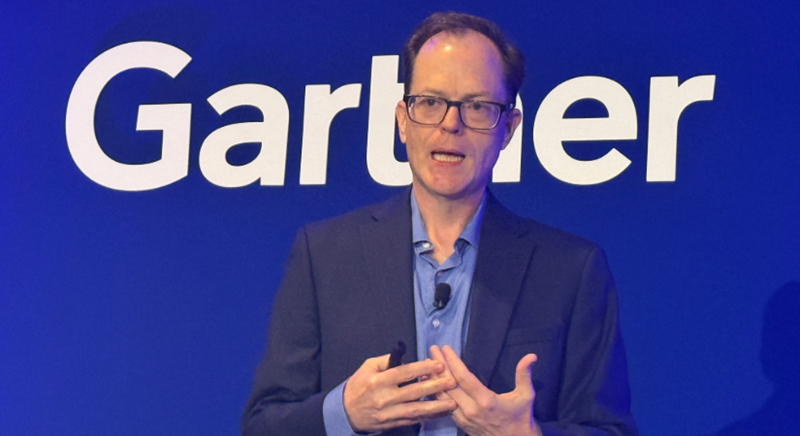
Figure 3. John Watts, VP Analyst at Gartner (Source: Gartner)
Watts explained that these changes in the threat landscape further increase the importance of CTEM (Continuous Threat Exposure Management). CTEM is not simply a process for managing vulnerability lists, but an operational model that continuously assesses an organization's actual exposure and attack likelihood while dynamically reprioritizing risks. Security efforts should focus on determining whether a threat is relevant to the organization, whether it requires immediate action, and whether the effectiveness of mitigation efforts can be measured. Watts emphasized that security in the AI era is no longer about processing more alerts, but about identifying meaningful signals amid an overwhelming amount of noise.
Leigh McMullen, who delivered the opening keynote, presented a similar perspective during the session "Use AI Like a Threat Actor and Other Strategies for AI in Cyber Defense." He argued that security organizations should adopt the same AI utilization strategies as attackers—but use them for defense instead. Attackers are already using AI for target selection, attack evasion, and the automation of repetitive tasks. Defenders, he noted, can apply AI in much the same way.
For example, AI can be used to generate new firewall rules based on EDR telemetry, validate them, and then deploy them automatically. Rather than making AI the ultimate decision-maker, organizations should use it to generate scripts and automation code that solve specific security challenges.
AI also has significant potential in the field of threat intelligence. By collecting CVE feeds, dark web intelligence, and industry-specific threat intelligence and integrating them into a RAG (Retrieval-Augmented Generation) pipeline, organizations can generate customized threat intelligence reports. They can also analyze the TTPs of threat actors targeting specific industries and the types of CVEs they commonly exploit to prioritize patch management.
McMullen advised that the key to both AI-powered attacks and defense lies in the direction of automation. Attackers use AI to accelerate repetitive tasks, while defenders should leverage AI to automate threat intelligence, CTEM, and SOC optimization.
He also emphasized that AI itself should not be the ultimate objective. What organizations need is not an AI roadmap, but a cybersecurity roadmap. They should first define their existing security objectives—such as improving patching speed, enhancing detection quality, and strengthening resilience—and then use AI as a means to achieve those objectives.
The Rise of AI Agents: How Should Security Evolve?
Recently, AI agents have been rapidly gaining adoption. While they are expected to bring significant improvements in operational efficiency, they also introduce new risks that are difficult to address with existing security models.
In the session "Technical Insights: Secure AI Agents Before They Go Rogue," Dennis Xu, Research Vice President at Gartner, emphasized that AI agents are not merely automation tools, but autonomous execution entities with high levels of privilege and autonomy. He cited real-world examples in which an AI agent deleted a user's mailbox and a coding agent deleted adatabase in just nine seconds, illustrating that AI agents have become a tangible operational risk.
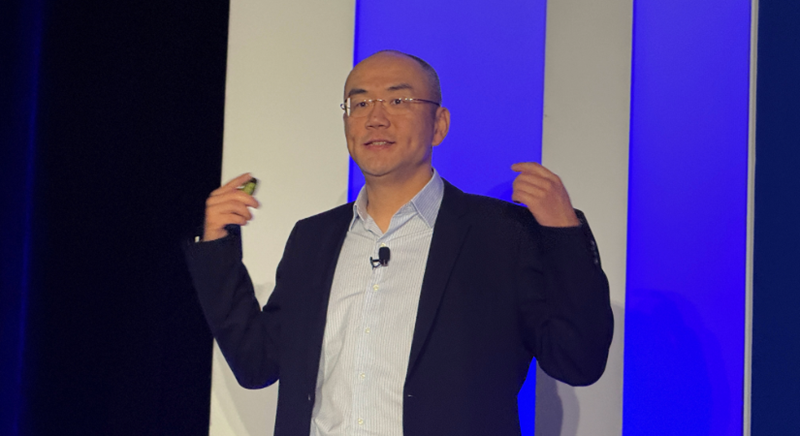
Figure 4. Dennis Xu, Research Vice President at Gartner (Source: Gartner)
Xu explained that AI agents introduce risks from two primary perspectives. The first is their ability to access sensitive data and critical systems, and the second is the fact that their reasoning capabilities are still imperfect. Current AI models cannot completely prevent prompt injection or jailbreak attacks. As a result, AI agents with permissions to access data, send emails, or control systems may perform unintended actions or be exploited by attackers. In particular, highly autonomous AI agents determine for themselves which tools to invoke and which data to access at runtime, making them difficult to control using conventional application security approaches alone.
To address these challenges, Xu recommended that AI agent security should begin with discovery and posture management. Organizations need continuous visibility into what AI agents exist within the organization, which platforms they were developed on, what roles they perform, which tools and MCP (Model Context Protocol) servers they are connected to, and what data they can access. In particular, because an AI agent's memory, MCP connections, and integrated tools can continue to change after deployment, organizations need continuous posture management rather than one-time assessments.
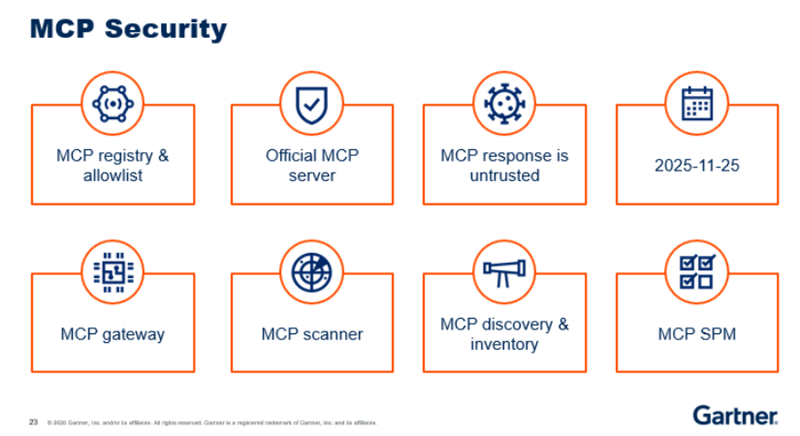
Figure 5. MCP security measures (Source: Gartner)
He also emphasized that red teaming, which tests and validates the risks associated with AI agents, is an important security control. Given the current state of technology, it is not feasible to automatically validate every scenario involving prompt injection, jailbreak attacks, and other AI-specific threats. Therefore, he advised that the objective of red teaming should not be to achieve perfect protection, but rather to identify risk priorities and strengthen response capabilities. Furthermore, validating AI agent risks requires more than simply examining inputs and outputs—it is also necessary to verify which tools the agent invokes and what privileges it actually uses.
Xu then introduced runtime monitoring and intent-based access control as two additional capabilities that organizations should implement.
- Runtime Monitoring: Detects prompt injection attacks while AI agents are running and monitors high-risk commands, abnormal behavior, and sensitive data access.
- Intent-Based Access Control: Dynamically adjusts permissions based on the intent of the task being performed, rather than granting static permissions. For example, if a user requests to view a calendar schedule, the agent is granted only “read” permission while “write” permission is withheld.
Ultimately, the core principle of AI agent security is not to trust AI agents by default, but to continuously validate and control their permissions and behavior.
The Next-Gen Security Model: Integrating CTEM and TDIR
In addition to Agentic AI, this year's conference also explored the evolution of existing security technologies. The common direction was not simply to expand security tools, but to transition toward an approach that connects more contextual information and enables decision-making based on actual risk.
During the session "Breaking Boundaries: Uniting Exposure Management & Threat Detection & Incident Response," Pete Shoard, VP Analyst at Gartner, emphasized the need to integrate exposure management with TDIR (Threat Detection, Investigation & Response).
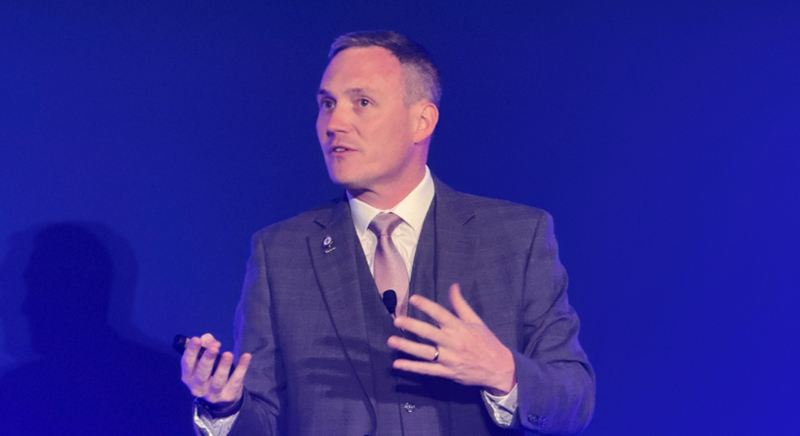
Figure 6. Pete Shoard, VP Analyst at Gartner (Source: Gartner)
Today, in most organizations, exposure management teams are responsible for attack surface analysis, vulnerability management, and risk prioritization, while the SOC focuses on detection and response based on SIEM, XDR, and threat intelligence.
Shoard pointed out that this separation creates limitations in security operations. Although the SOC can collect and analyze logs across email, endpoints, networks, and cloud environments, it often lacks sufficient context such as asset criticality, attack paths, vulnerabilities, configuration data, and access privileges. Conversely, exposure management teams can leverage vulnerabilities, attack surface data, and business context to prioritize actual risks, but they are often not sufficiently connected to incident response data, detection rules, or insights generated by the SOC.
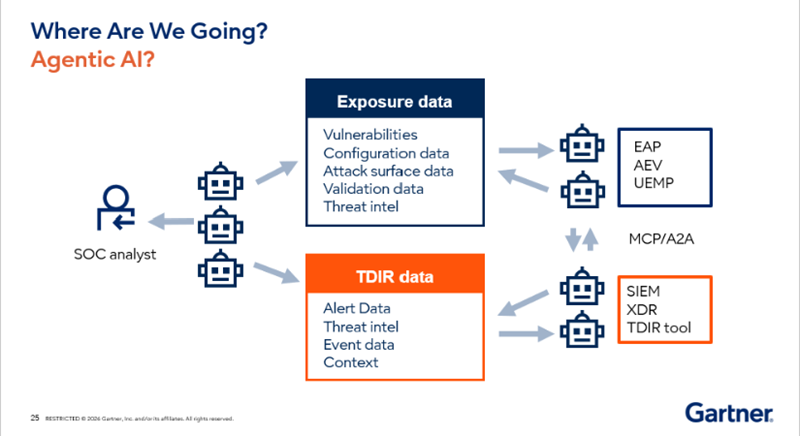
Figure 7. Agentic AI-based integration of exposure management and TDIR (Source: Gartner)
As the future direction, Shoard proposed insight integration rather than data integration. He emphasized the importance of connecting the risk scores, attack graphs, and validation results generated by exposure management platforms with the SOC's detection results, threat intelligence, and insights into ongoing attacks. He also explained that AI agents can serve as an interface that queries and connects exposure management platforms, SIEM, XDR, and threat intelligence sources in real time.
The key is not to centralize all data into a single repository, but to retrieve the right context at the right time and use that context to make more informed decisions and improve response capabilities.
Conclusion: The Future of Cybersecurity with Agentic AI
Through its numerous sessions and vendor exhibitions, Gartner SRM Summit 2026 provided valuable insights into the future direction of cybersecurity centered on agentic AI, as well as the latest developments shaping the industry.
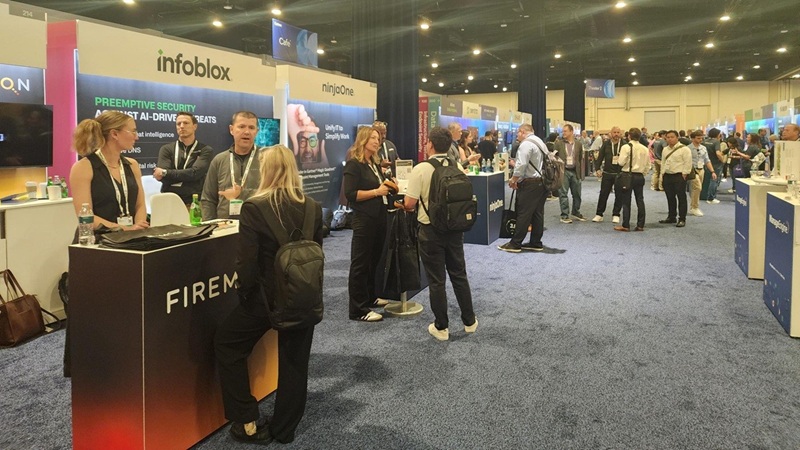
Figure 8. Gartner SRM Summit 2026 exhibition hall
In line with global trends, AhnLab is delivering comprehensive AI security capabilities centered on its agentic AI security platform, AhnLab AI PLUS, covering not only AI-powered cybersecurity but also security for AI models themselves. Through these capabilities, we have become a trusted partner that enhances the security of the AI transformation (AX) initiatives being pursued by customers across industries.
Learn more about AhnLab AI PLUS
- AhnLab


