


RSAC 2026 Key Takeaways: Cybersecurity Is Being Reshaped in the Era of Agentic AI
From March 23 to 26, RSAC 2026, the world’s largest cybersecurity conference, was held at the Moscone Center in San Francisco. With more than 40,000 attendees, this year’s event highlighted the growing importance of people, collaboration, and community in the age of AI under the theme “Power of Community.” The conference featured keynote sessions on emerging security trends alongside exhibitions from global organizations and vendors.
AhnLab participated with a dedicated booth for the third consecutive year, showcasing its agentic AI-driven security technologies, including XDR, threat intelligence, and CPS security. The company drew strong interest from global attendees through live demonstrations of its AI-powered security capabilities.
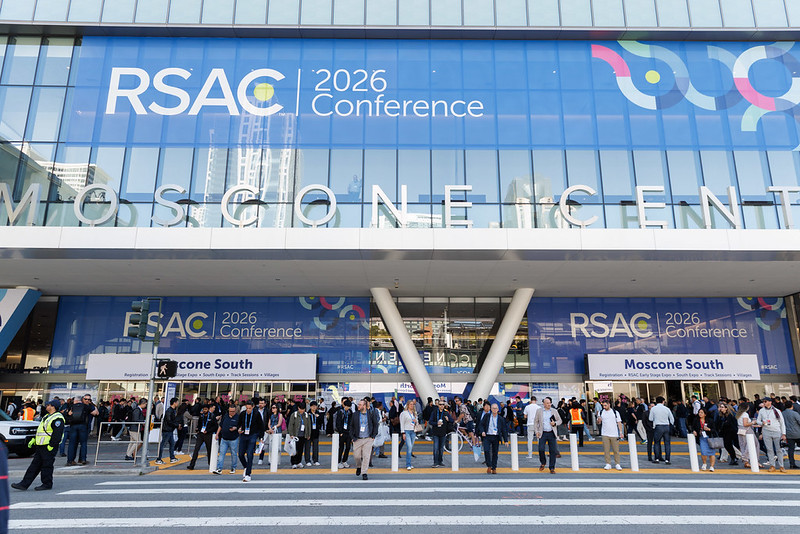
[Photo 1] RSAC 2026 at Moscone Center (source: RSAC)
RSAC 2026 Theme: “Power of Community” and the Future of Security
The official theme of RSAC 2026, “Power of Community,” reflects a fundamental shift in how cybersecurity is approached. As cyber threats become more sophisticated, organizations can no longer rely on isolated defenses. Instead, collaboration and intelligence sharing across the global security community are becoming essential.
Beyond human collaboration, the concept of “community” now extends to a broader ecosystem where people, AI, and systems operate together seamlessly. With the rise of Agentic AI, AI is no longer just a tool - it is becoming an autonomous decision-maker within security operations. This marks a fundamental shift away from traditional human-centric security models.
In this context, security is no longer just about deploying technologies. It is about designing how different entities interact, collaborate, and establish trust. The “Power of Community” is therefore more than a slogan. It is a declaration of where cybersecurity is heading.
Keynote Insights: From AI Adoption to Controllable AI
The keynote sessions at RSAC 2026 shared a clear message: cybersecurity is moving beyond AI adoption toward AI security and governance. AI is no longer optional, but it is the foundation of modern security strategies. The key challenge for organizations is now how to safely and effectively operationalize AI.
Hugh Thompson (Executive Chairman, RSAC) – “What’s Your Why?”
Hugh Thompson emphasized that organizations must move beyond passive AI adoption to AI-driven changes and take responsibility for actively leveraging AI in defense. While AI is transforming the security landscape, attackers are equally benefiting from it.
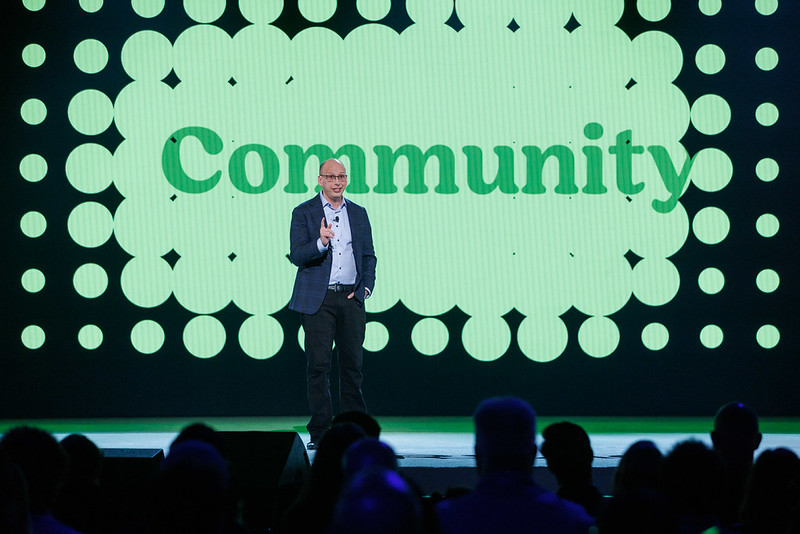
[Photo 2] Hugh Thompson, Executive Chairman, RSAC (source: RSAC)
He stressed that future security will not be defined by AI technology alone, but by how responsibly organizations operate AI. Importantly, he highlighted that the human element remains central; AI security ultimately depends on the people who design and manage it.
As a result, the role of security teams is expanding. They are evolving from reactive defenders into strategic operators responsible for designing and running AI-driven security systems.
Vasu Jakkal (Corporate Vice President, Microsoft Security) – “Ambient and Autonomous Security: Building Trust in the Agentic AI Era”
Vasu Jakkal highlighted the transition toward autonomous security, where AI systems independently plan and execute threat responses. She noted that attackers are already using AI to automate 80-90% of tactical cyberattacks, including phishing and malware generation, enabling large-scale autonomous attacks.
In response, security must evolve from event-based protection to an ambient security model - one that operates continuously and seamlessly in the background. Cybersecurity should no longer be something users notice only when issues occur; it must be embedded across the entire system.
This shift introduces new risks. Jakkal emphasized that visibility and governance are essential to understand and control AI behavior. She defined trust as the core of AI-era security, underscoring the importance of continuously validating AI decisions and their underlying logic.
Sandra Joyce (VP, Google Threat Intelligence) – combating advanced threats through collective defense
Sandra Joyce highlighted how AI is dramatically accelerating the speed, scale, and sophistication of cyberattacks. According to her, the time from initial compromise to full attack execution has dropped from eight hours in 2022 to just 22 seconds in 2025.
To keep pace, defenders must also adopt AI-driven approaches across threat hunting, patching, and response. She stressed that security teams can no longer rely on passive detection or simply counting threats. Instead, the industry must work collectively to build cyber resilience through collaboration.
Taken together, these keynotes deliver a clear message: the future of cybersecurity depends on how effectively organizations can operate AI in a trustworthy and controlled manner. As Agentic AI becomes more prevalent, security teams must take on a central role in managing AI-driven environments.
Innovation Sandbox 2026: The Rise of AI Governance
The RSAC Innovation Sandbox has long been a platform for showcasing the future of cybersecurity. In 2026, AI-driven technologies dominated the stage, particularly those focused on securing and controlling AI itself.
The winner, Geordie AI, introduced an AI governance platform designed to analyze and control the behavior of AI agents. The platform continuously monitors decision-making processes and behavioral patterns, enabling organizations to enforce policy-based controls.
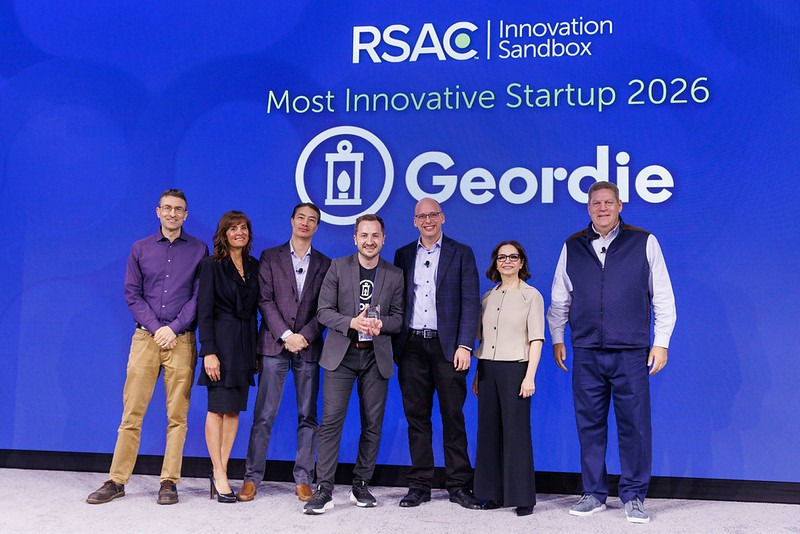
[Photo 3] Geordie AI winning Innovation Sandbox (source: RSAC)
Their win reflects a critical shift in cybersecurity. The focus is moving away from simply detecting and blocking threats toward understanding and controlling AI behavior. In other words, AI is no longer just a tool - it is becoming a key asset that must be secured.
Exhibition Trends: From AI-Powered to AI-Native Security
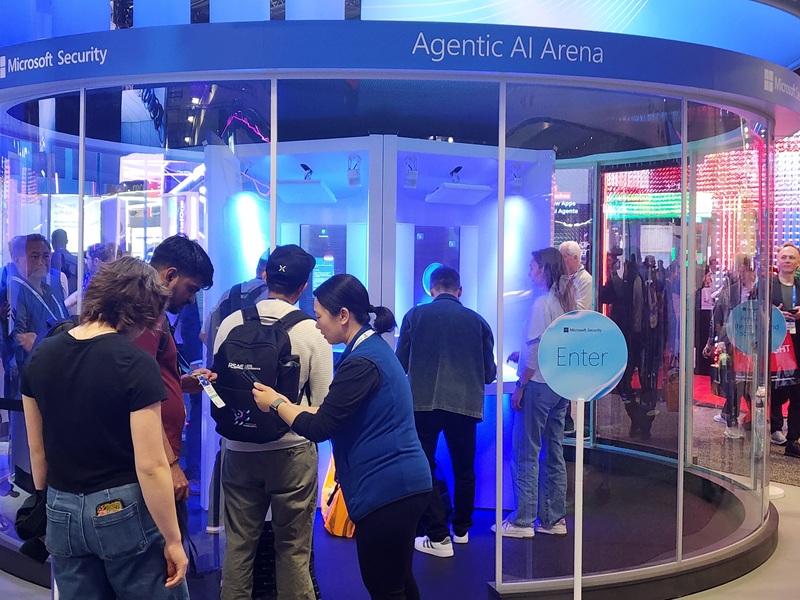
At the RSAC 2026 expo, nearly every vendor showcased AI-driven capabilities. However, their approaches fell into three distinct categories, reflecting the evolving structure of the security market.
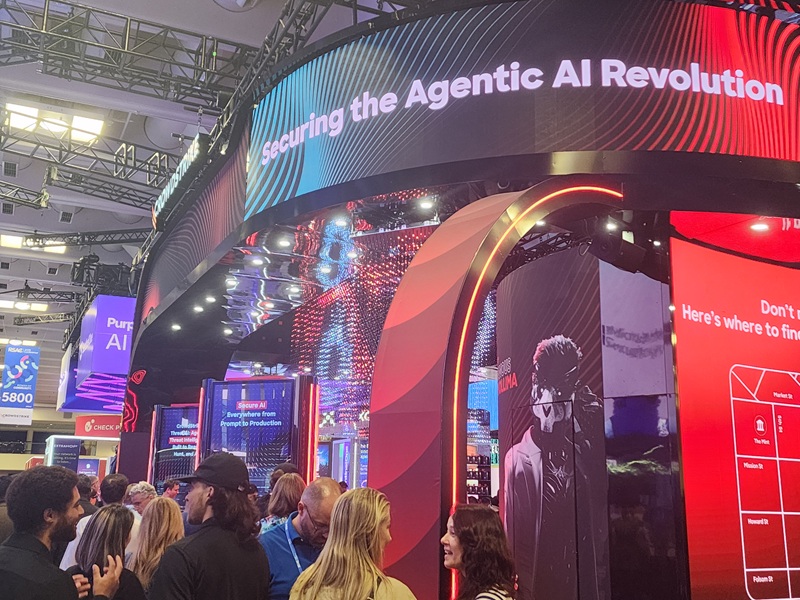
[Photo 4] RSAC 2026 exhibition (1)
[Photo 5] RSAC 2026 exhibition (2)
First, AI-powered solutions integrate AI into existing products such as EDR and XDR. These solutions enhance detection, analysis, and response through automation and AI assistants, and remain the most common approach in the market today.
Second, refers to a model that is restructured around AI from the initial design stage, where the entire process from data collection and analysis to response is connected in a single flow. This approach redefines the security architecture itself and offers strong advantages in terms of automation and scalability. At the event, some vendors were seen maintaining their existing solutions while simultaneously pursuing strategies to build AI-native platforms. However, from the perspective of fully realizing agent-based AI-native security operations, most were still in transition, with only partial capabilities implemented.
Third, AI security and governance has emerged as a new critical domain. As Agentic AI expands, AI itself has become both a new asset to protect and a new attack surface. Similar to the trends observed in the Innovation Sandbox, technologies that monitor and control AI behavior were also evident. As AI-native adoption grows, trust and safe usage of AI become increasingly important, positioning AI security & governance as a complementary and co-evolving domain.
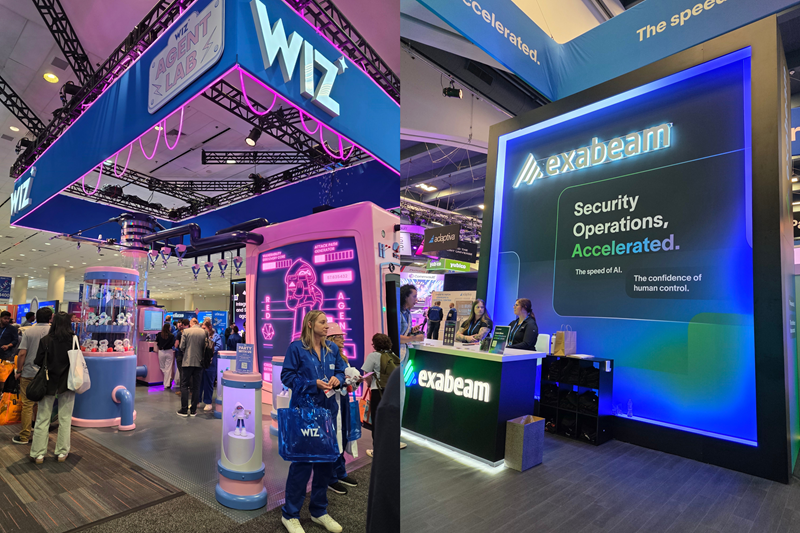
[Photo 6] RSAC 2026 exhibition (3)
In parallel, identity is evolving beyond user accounts to include AI agents and cloud workloads, reflecting the need for more comprehensive access control models. Additionally, new attack vectors such as prompt injection and context manipulation are targeting AI decision-making processes, further expanding the security landscape.
AhnLab at RSAC 2026: Showcasing AI-Powered Cybersecurity
At RSAC 2026, we presented our vision under the theme “AI-Powered Cybersecurity: Think, Decide, Act.” We demonstrated our AI-driven XDR, threat intelligence, and CPS security platforms, attracting strong interest from global attendees.
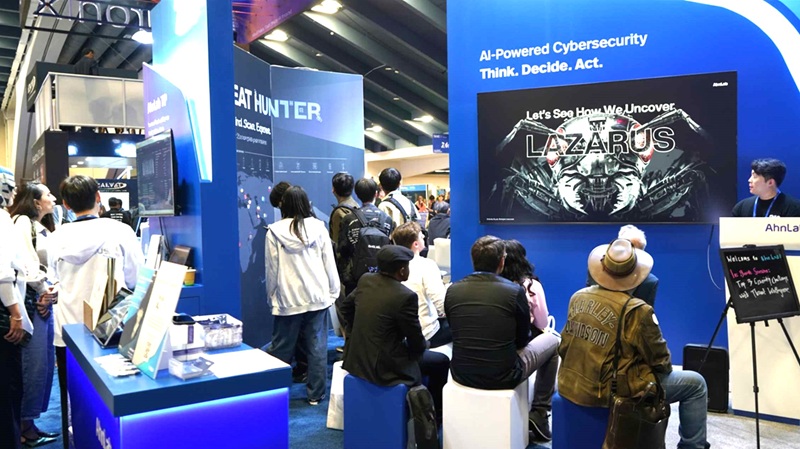
[Photo 7] AhnLab booth at RSAC 2026
Visitors experienced how our AI platform, AhnLab AI PLUS, enables agentic AI-driven autonomous security operations from threat identification to analysis and response.
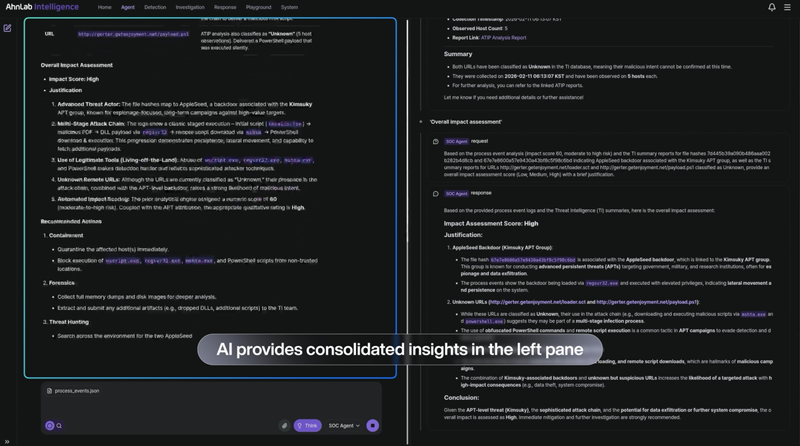
[Photo 8] A part of AhnLab AI PLUS demo video (watch demo)
AhnLab XDR: AI-powered threat detection & response validated in MITRE ATT&CK Evaluations
AhnLab XDR drew attention for its integrated threat detection and response capabilities, which have been validated through major global security testings such as the MITRE ATT&CK Evaluations. By enhancing features such as the AI security assistant “Annie” and ML-powered detection rules, we apply AI across the entire process of threat detection, analysis, and response. Visitors showed strong interest in how this AI-powered XDR platform enables early threat identification and systematic risk assessment, ultimately improving the efficiency of security operations.
AhnLab CPS PLUS: A global-leading CPS security platform integrating OT and IT
We also identified growing demand from various countries seeking to address increasingly stringent security regulations, particularly in global manufacturing environments. Our CPS security platform, AhnLab CPS PLUS, received positive feedback for its ability to provide stable system protection without operational disruption, along with strong threat detection capabilities, based on extensive references across various industries.
In particular, visitors showed strong interest in its superior asset visibility compared to competitors, enabled by the integration of the OT network security solution “AhnLab XTD” and the OT endpoint security solution “AhnLab EPS.”
Based on our broad CPS security coverage and strong customer references, AhnLab was recognized as a global leader in CPS security in Frost & Sullivan’s 2025 Frost Radar.
AhnLab TIP: Actionable threat intelligence with expanding global adoption
Our threat intelligence platform, AhnLab TIP, attracted strong interest for its ability to provide actionable, advanced threat intelligence. A key differentiator is our proprietary intelligence, directly collected and analyzed by our experts across domains such as Indicators of Compromise (IoCs), the dark web, and threat actor intelligence.
In addition, the AI assistant powered by an in-house LLM enables security teams to easily access the threat intelligence they need. This intelligence is integrated with our various security products, enabling it to be used immediately in real-world decision-making and response.
With its unique analytical capabilities for hunting threat groups in the Asia-Pacific region, AhnLab TIP is being adopted continuously by customers in countries such as Japan and Singapore.
Real-world threat cases and trends presented by the TI expert
Lee Jung-wook, a manager from ASEC (AhnLab Security intelligence Center), our threat intelligence unit, participated as a speaker in an official RSAC briefing session. Under the topic “Abusing Legitimate Platforms: Real-World Threat Cases and Trends,” he shared in-depth insights into the latest threat landscape.
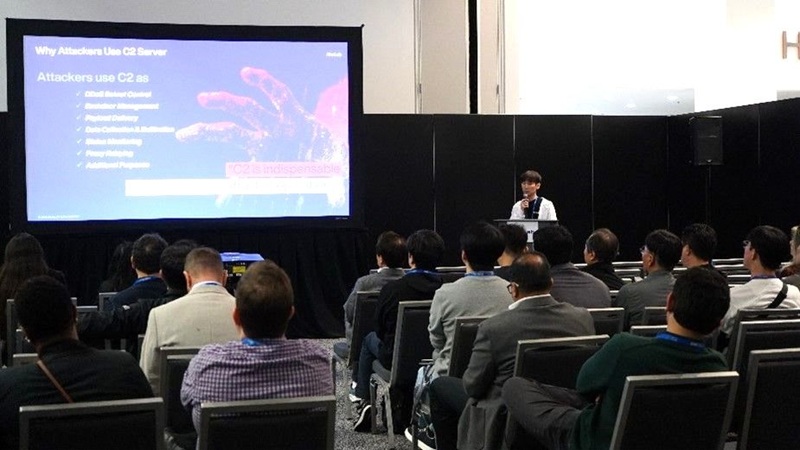
[Photo 9] Lee Jung-wook’s briefing session
Focusing on real-world attack cases, he analyzed emerging attack techniques that exploit legitimate platforms such as gaming, development, and messaging services, and presented corresponding response strategies. His session prompted active engagement from global security professionals, who raised questions about AhnLab’s decades of accumulated threat intelligence and its advanced analysis and hunting capabilities.
Agentic AI and Cybersecurity: AhnLab Expanding Its Presence
The defining theme of RSAC 2026 was undoubtedly Agentic AI. Across the industry, organizations are preparing for the future through strategies ranging from AI-powered security to AI-native architectures and AI governance.
Security is no longer centered solely on protecting IT assets. It is increasingly focused on securing AI itself and ensuring trust in AI-driven environments. At the same time, collaboration across organizations is becoming more critical than ever.
AhnLab continues to strengthen its AI-powered security platform, enhancing detection, analysis, and response capabilities to improve operational efficiency for customers worldwide. As the company advances its AI security technologies, it remains committed to helping global organizations navigate the evolving cybersecurity landscape.
Please visit our website to learn more about our AI security capabilities.
- AhnLab