Securing the Future: Our Next Generation Network Security
Cyberattacks targeting organizations continue to grow in both volume and sophistication. As corporate networks remain a primary entry point for attackers, techniques are evolving rapidly, forcing constant changes in security requirements.
To stay ahead of ever-evolving cyber threats, we have upgraded our next-generation network security portfolio with new models and enhanced performance.
This article outlines the key capabilities and improvements introduced across our latest network security solutions.

2025 Threat Landscape
Our recent research indicates that cyberattacks continue to increase not only in volume but also in their potential to disrupt core business operations. In addition, according to Verizon 2025 Data Breach Investigations Report (DBIR), organizations are experiencing a sharp rise in weekly attack volumes, with ransomware involved in 44% of all analyzed breaches. This figure represents a 37% increase compared to 2024, confirming that ransomware has firmly established itself as a dominant and highly effective attack method rather than an occasional or opportunistic technique.
Enterprise networks have long been a primary target for attackers, and that pressure continues to intensify. Further findings from the Verizon report show that vulnerability exploitation increased by 34% year over year, and exploit-based intrusions now account for 20% of all initial access attempts. In particular, attacks targeting edge devices and VPN infrastructure have increased eight times, exposing the growing gap between modern attack techniques and traditional perimeter-based security models.
This evolving threat landscape highlights a clear shift in security requirements. Organizations can no longer rely on static defenses or isolated controls. Network security solutions must deliver high-performance traffic inspection while dynamically adapting to emerging threats, including zero-day exploits, to ensure service stability and business continuity.
Our Network Security Solutions Evolved Once Again
Our network security portfolio includes next generation firewall AhnLab XTG, intrusion prevention system AhnLab AIPS, DDoS mitigation solution AhnLab DPX and centralized management platform AhnLab TMS.
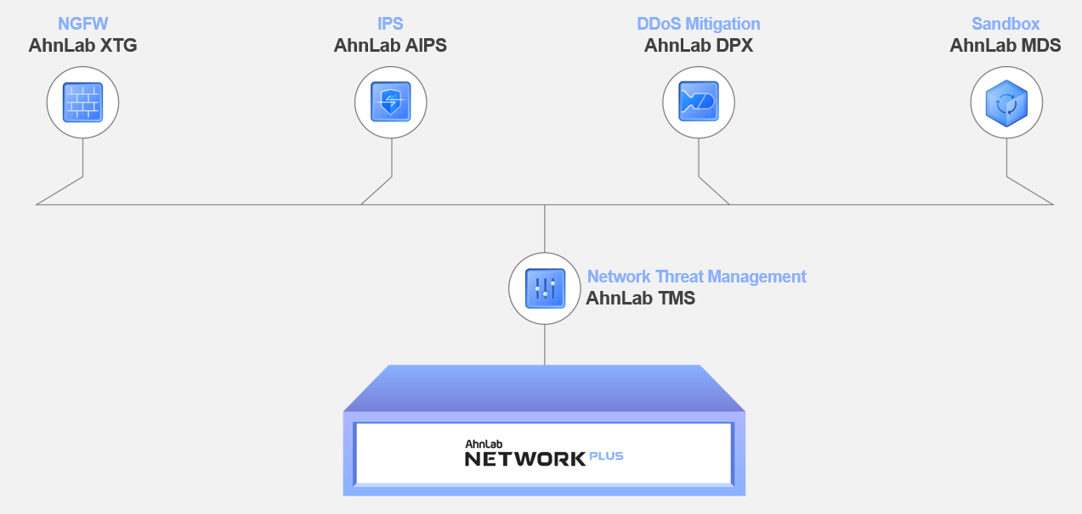
Figure 1. Our unified network security architecture
With recent updates, we have reinforced our entire lineup to deliver stronger security performance while expanding deployment and configuration options to better support diverse enterprise environments. Each solution has been enhanced not only as a standalone product, but also to operate more effectively as part of a unified security architecture.
AhnLab XTG 300, 500 and 1000: Optimized for Mid-Sized Enterprises
The newly released AhnLab XTG 300, 500, and 1000 models are designed specifically for mid-sized enterprise networks that must handle high traffic volumes while maintaining secure connectivity between headquarters, branch offices, and remote users.
AhnLab XTG delivers robust firewall performance and supports IPSec VPN, SSL VPN, and lightweight VPN to enable secure communication across distributed environments. Built-in ZTNA (Zero Trust Network Access) capabilities continuously verify users and devices, enforcing granular access control based on VPN-driven policies rather than implicit trust.
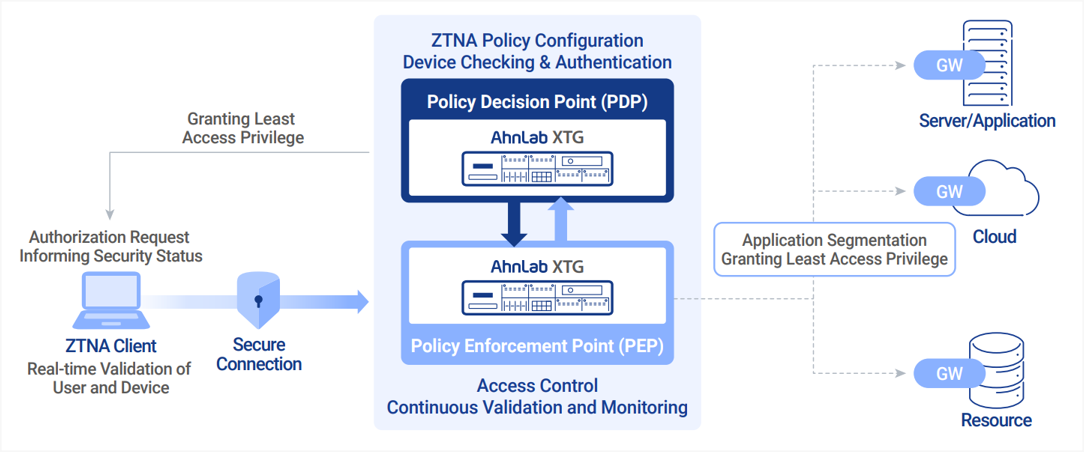
Figure 2. ZTNA architecture of AhnLab XTG
Logical virtualization allows a single appliance to operate as up to 20 independent environments. This significantly improves operational efficiency. AhnLab XTG also provides a comprehensive set of network security features including IPS, application control, URL filtering, C2 detection, anti-spam, DDoS mitigation, SD-WAN, and data loss prevention.
AhnLab DPX: Advanced DDoS Mitigation
AhnLab DPX introduces three new models including the DPX 5000C, 10000C, and 20000C which are designed to respond to increasingly sophisticated DDoS attacks while maintaining service continuity. The DPX C series applied HTTP/3 QUIC based deep packet inspection enabling accurate detection even in modern web services and browser environments. More than 60 behavior-based detection rules allow for precise identification and mitigation of malicious traffic.
High-performance packet processing based on DPDK supports stable operation in 100G network environments, while zone-based multi-tenancy improves cost efficiency for organizations managing multiple services or customers. A scrubbing center integration further enhances resilience by automatically redirecting traffic during sudden attack surges, enabling real-time mitigation without service interruption.
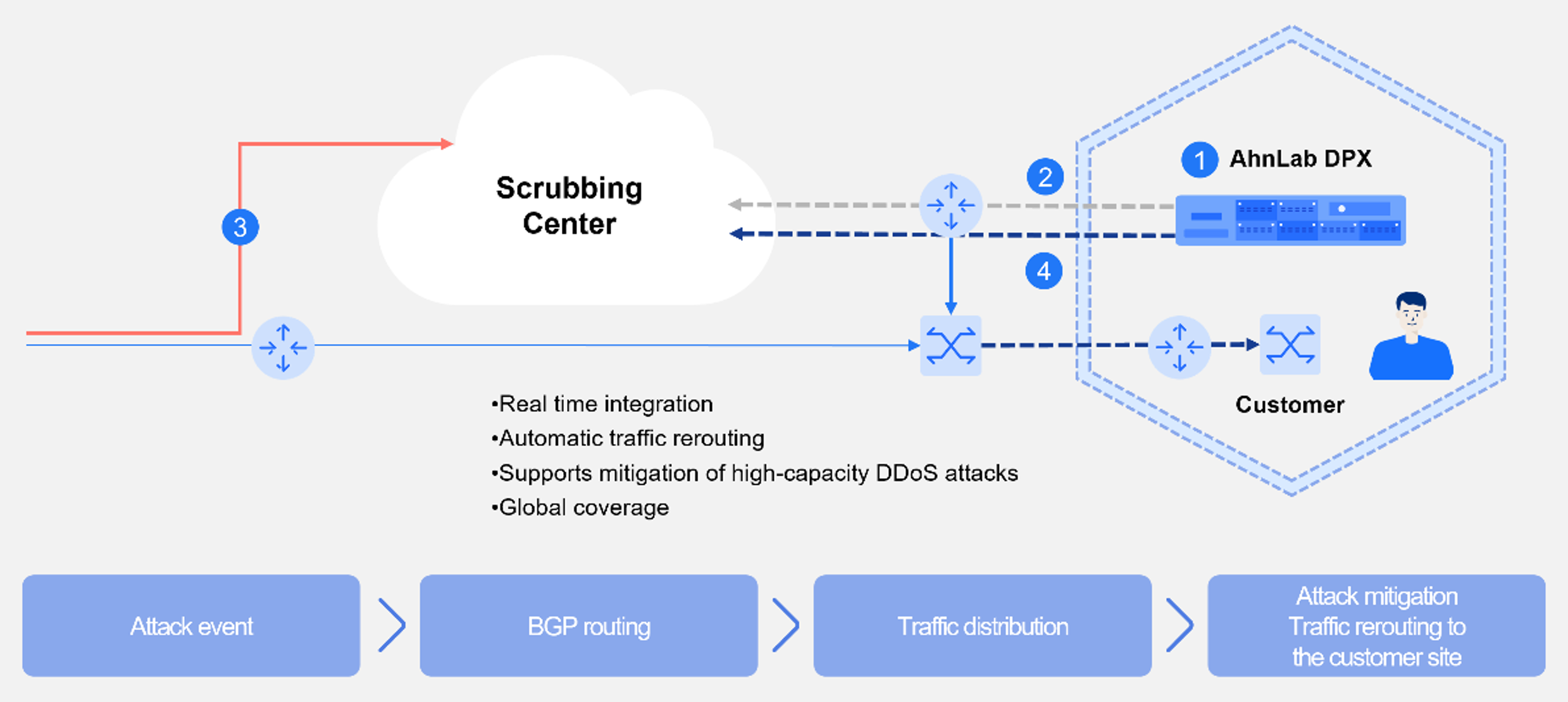
Figure 3. Scrubbing center integration of AhnLab DPX
AhnLab AIPS: Enhanced Threat Detection and Prevention
AhnLab AIPS has been updated to deliver faster response times and higher detection accuracy against advanced threats, while expanding its lineup to better align with organizations of varying sizes.
The new AIPS C series includes five models (AIPS 1000C, 2000C, 5000C, 10000C, 20000C) allowing more flexible deployment across different network scales. By adopting the high-performance CPUs and storages, the new lineup significantly enhances packet processing while reducing latency and improving system stability.
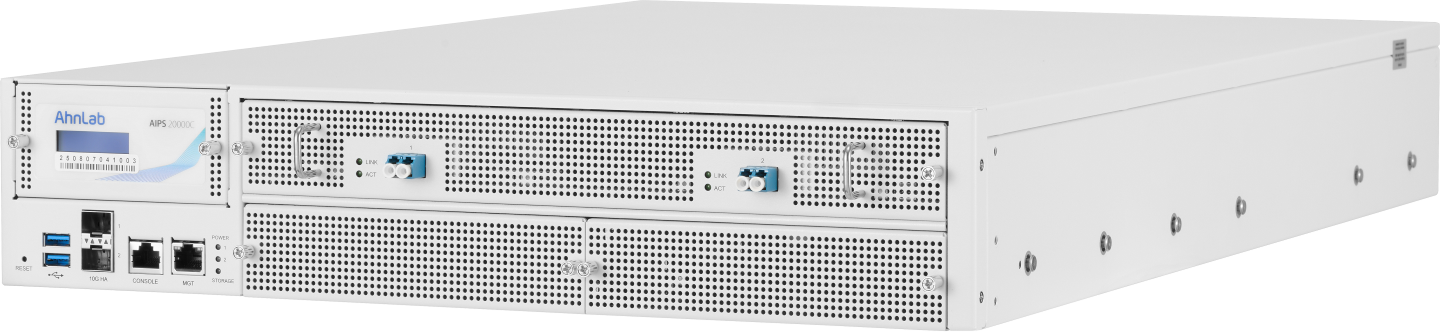
Figure 4. AhnLab AIPS 20000C
Leveraging signatures collected and analyzed by our security infrastructure, AhnLab AIPS provides granular threat detection from Layer 2 through Layer 7. This enables effective protection against evolving attack techniques, including sophisticated malware and network-based exploits.
AhnLab TMS: Greater Visibility and Management Powered by Better Performance
Alongside the updated network security products, we have also released a new lineup of the centralized management system, AhnLab TMS. The new TMS models (5000C, 15000C, and 25000C) ensures powerful performance while they manage policies and monitor threats across the entire network from a single platform.
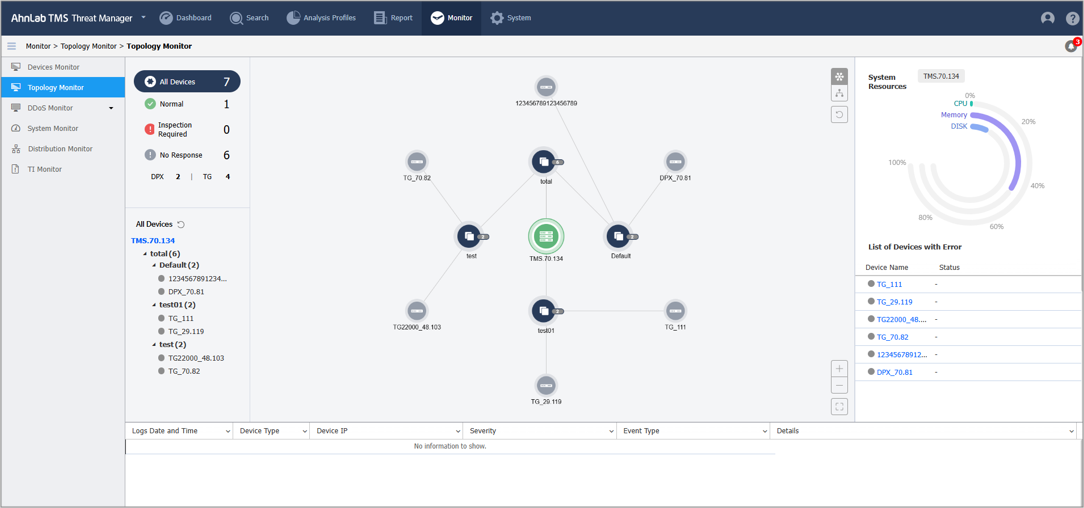
Figure 5. Network topology of AhnLab TMS
The TMS C series strengthened processing performance through updated kernels and CPUs, while enhanced log storage and session handling improved overall system stability. AhnLab TMS has also expanded visibility by visualizing inter-product relations with the intuitive topology map. It enables administrators to quickly understand network structure and security status.
In addition, we redesigned the user interface to reduce operator fatigue during long monitoring sessions, and a new dark mode option is now available for users.
Conclusion
Our upgraded network security portfolio reflects the company’s accumulated experience in addressing rapidly evolving cyber threats. Rather than focusing solely on individual product enhancements, these solutions are designed to seamlessly interact with each other, supporting stable and effective security operations even as network environments grow more complex.
With flexible configurations that support organizations of different sizes and industries, our network security solutions enable enterprises to build security strategies aligned with their specific operational requirements.