


Two Variants of CryptoMix Ransomware Released
New ransomware, Azer ransomware, which encrypts and adds Azer extension, and Exte ransomware, which encrypts Exte extension to data stored on an infected computer, was discovered on July 5 and 14. AhnLab has analyzed the ransomware and found it to be variants of CryptoMix.
CryptoMix was first discovered in May 2016 and is well known due to the continuous discovery of its variants. Currently, CryptoShield 1.0 and 2.0, Revenge, Mole, and Wallet ransomware are all classified as variants of CryptoMix. As new variants are arising with one code base, it can be assumed that a hacker is modifying the original or it is being actively generated via the Ransomware as a Service (RaaS).
Azer ransomware found on July 5 was written in Visual C++. On an infected system, it duplicates in the Application Data folder and executes. It also adds itself to the startup program by editing the registry so the encryption of user files is unaffected by the computer being shut down or rebooted.
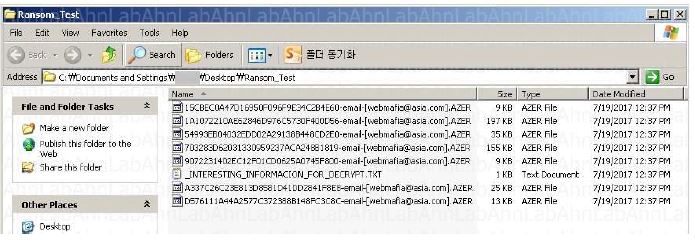
[Figure 1] Example of file names and extensions edited by Azer
Azer encrypts files in the system regardless of extensions, except in folders such as System32 and Program Files. The AZER extension is added to the encrypted files and the filename is changed to the format of [32 hexadecimal digits] -email- [webmafia@asia.com], as shown in Figure 1.
The ransom note, shown in Figure 2, is created inside the encrypted folder and contains the unique ID of the infected computer and two email addresses to contact for decryption; the first is used for the filename and the second is derived from the name of the US president, Donald Trump.
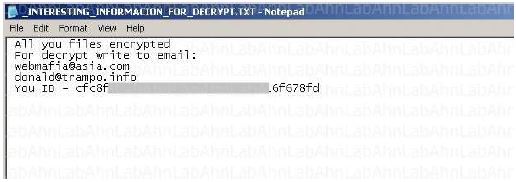
[Figure 2] Ransom note of Azer
Also, similar to other types of ransomware, Azer deletes the system restore points so the user cannot simply remove the ransomware and restore their files.
Exte ransomware, found on July 14, is almost identical to Azer. It is written in Visual C++, follows the baseline code of CryptoMix, creates a copy of itself and modifies registry entries. The encryption method is also similar to Azer. The ransomware encrypts files regardless of extensions within the system and adds Exte extension to the excepted file as shown in Figure 3.
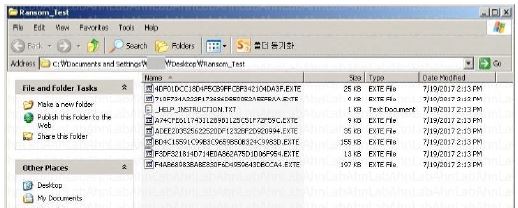
[Figure 3] Example of file names and extensions edited by Exte ransomware
Although the filename is in a similar format, Exte encryption does not include an email address in the name [hexadecimal 32 characters]. The ransom note also differs- instead of two email addresses, three are provided, all starting with 'exte' and each with different domain addresses.
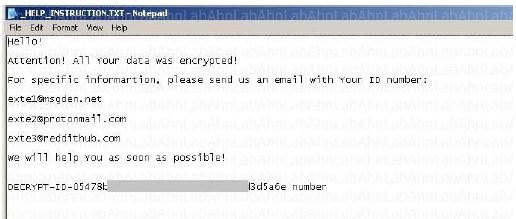
[Figure 4] Ransom note of Exte
After careful observation, it can be said that CryptoMix ransomware does not have the same catastrophic effect as the Erebus ransomware exploiting Linux systems in June 2017, WannaCryptor hitting systems worldwide, or Petya distributed in Ukraine to damage entire hard disk drives. Nonetheless, users are warned to be on the alert as variants of CryptoMix are continually being discovered- even with the decrease of distribution via exploit kits, it is still being distributed via emails and the threat from ransomware still very real.


